

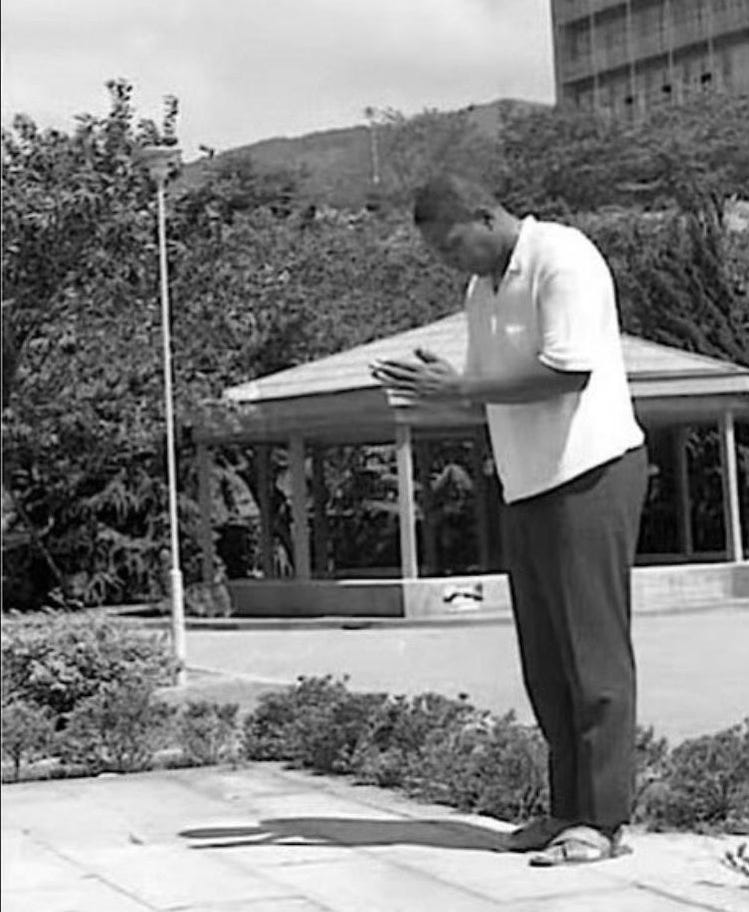
John Coltrane occupied a category of his own. Not simply as a saxophone player, though on that instrument alone he rewrote the technical and emotional possibilities so thoroughly that every serious player who came after him has had to reckon with what he left behind. Not simply as a jazz musician, though his contributions to the music across barely two decades of recording activity reshaped the entire field. The singularity ran deeper than either of those things. It touched the man himself, the way he moved through the world, the way he thought about sound, about time, about the obligations a person carried when they had been given a gift of that magnitude.
Most musicians, even great ones, exist in a recognizable human pattern. They develop, they peak, they refine, they coast a little, they leave a body of work. Coltrane refused that arc. He treated mastery not as a destination but as a new starting point, and the moment he achieved something, he began dismantling it in search of whatever came next. He arrived at his first major innovations on the saxophone already a grown man, already in his thirties, already formed. Then he kept forming. The classic quartet years, the modal explorations, the sheets of sound that critics scrambled to name, A Love Supreme, and then the late period that left even devoted listeners standing at the edge of something they couldn’t quite see across. Each phase was complete in itself and also a refusal to stay comfortable.
This restlessness was not, as some people mistook it, dissatisfaction. It was closer to devotion. Coltrane spoke often, in his quiet way, about music as a spiritual practice, about the saxophone as something he had been given to use in service of something larger than his own career or reputation. He studied Indian classical music, African rhythms, the modal systems of cultures that had no connection to the Western jazz tradition he had been trained in, not because he was collecting influences but because he was genuinely searching. He believed there was a truth that music could reach, a frequency where the human and the divine touched, and he spent his life trying to find it.
Jazz writer Bob Blumenthal, who has spent decades tracing the lineages and legacies of this music with more precision than almost anyone, has articulated what it is that sets Coltrane apart from even the most exceptional musicians who surrounded him. What Blumenthal points to is not any single technical achievement, though the technical achievements were staggering. It is something more difficult to quantify, a quality of absolute commitment, of a man for whom the music was genuinely inseparable from his spiritual life, his moral life, his daily life. Coltrane practiced when other musicians slept. He studied when other musicians socialized. And he did none of this with the grim discipline of someone punishing themselves toward greatness. By all accounts, he did it because he could not imagine doing otherwise. The music was not what he did. It was what he was.
That is what makes listening to Coltrane different from listening to other musicians, even other giants. You feel the wholeness of a human being behind every note, the weight of someone who has put everything on the table and is holding nothing in reserve.
Watch Bob’s interview:
So well articulated. Musicians try and succeed at analyzing what Coltrane did intellectually. It’s much harder to reckon with what he did spiritually. For instance, at one point he said he was searching for the right combination of notes and frequencies to make it rain. This was a man who understood, much like a musical Nikola Tesla, that there contained magical properties in the arrangement of sound. I wish I could have experienced that live and in person.
You couldn't name those qualities in Coltrane unless you yourself recognized the same things inside yourself. I perceive you as a Tzaddik. The work you do is Tzaddik's work.