

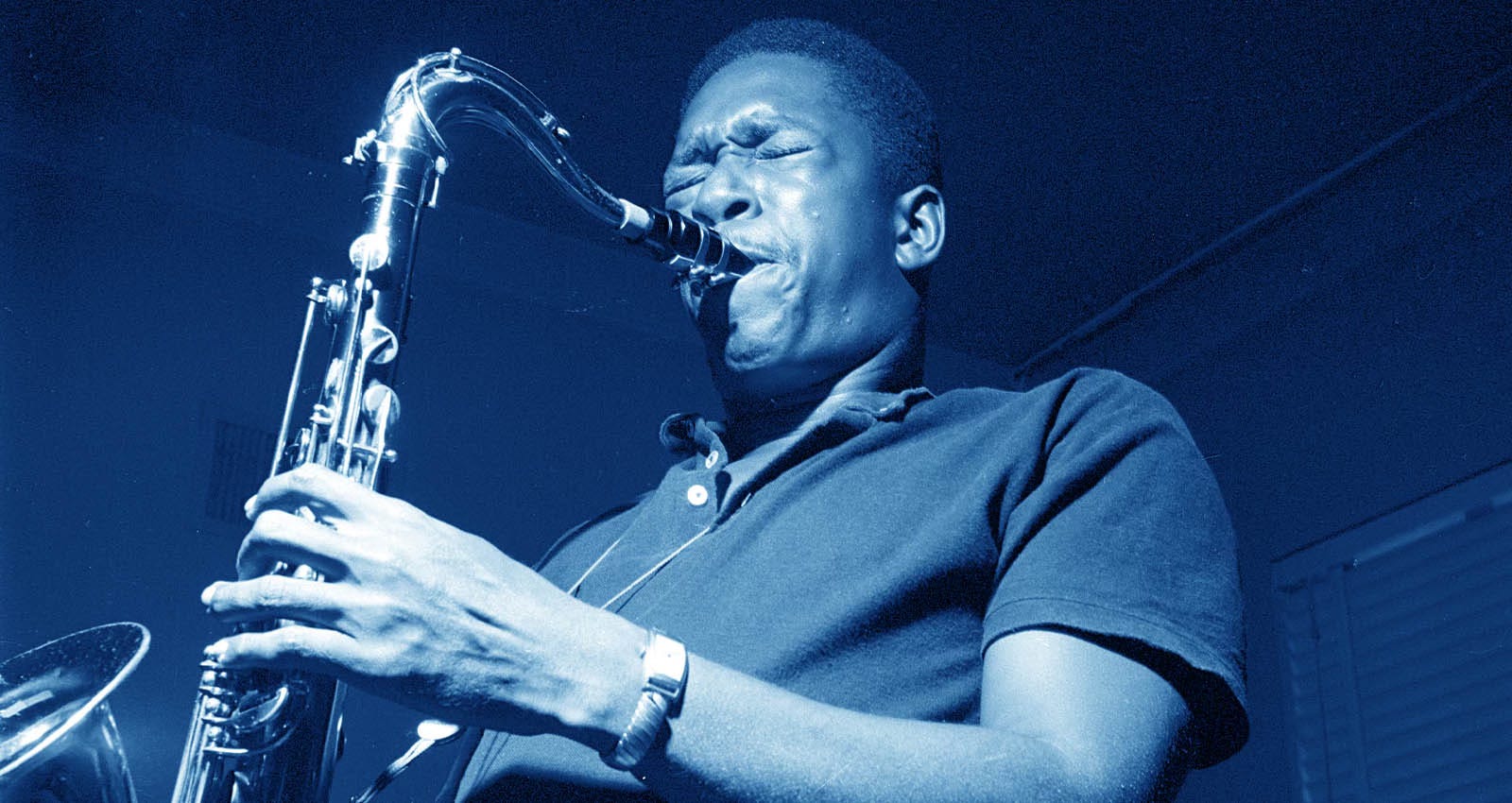
Jazz writer extraordinaire Bob Blumenthal saw the John Coltrane live in one of their final appearances at Boston’s Jazz Workshop in December of 1965. By then, the working group was augmented by Pharoah Sanders on tenor and Rashied Ali and drums. Soon after that gig, first McCoy left the group, then Elvin.
Both departures came down to the same root cause: Coltrane’s music had moved into territory that neither man could fully inhabit with him.
McCoy Tyner felt musically lost in the new free context. With the addition of Pharoah Sanders, the band had grown louder and more chaotic, and Tyner found that his piano was simply getting swallowed up. More than a practical complaint, though, he had a genuine artistic and spiritual disconnect with where the music was heading. He told interviewers that he could no longer hear himself or find his place in the sound, and that he needed to be able to make a meaningful contribution. When he couldn’t, he left. It was a quiet, dignified exit from a man who knew his own musical identity well enough to recognize when it no longer fit.
Elvin Jones held on a bit longer, finally departing in early 1966, but his reasons were closely related. The addition of a second drummer, Rashied Ali, was the breaking point. Jones felt that the two-drummer format undermined the rhythmic conversation he had always had with Coltrane, which was one of the most profound drummer-leader relationships in jazz history. That conversation depended on a certain kind of space and interplay, and with Ali also playing, Jones felt crowded out of the very thing that made the gig meaningful to him. There were also reports of tension between Jones and Ali personally.
What makes both departures poignant is that neither man was simply resistant to change. Tyner and Jones had already traveled enormous musical distances with Coltrane through the classic quartet years. But Coltrane’s final period was something genuinely different, a move toward collective sound masses and a near-dissolution of individual roles, and for two musicians whose genius was so distinctly individual and voice-driven, there was simply no comfortable place left to stand.
View Bob’s memory of the third time he heard Trane live, and his thoughts on why the group changed:
Dear Mr. Primack,
Thank you for your excellent posts and essays about John Coltrane. I read them almost daily, and they continue to inspire me on a regular basis.
Even though I am a guitarist, Coltrane’s music and musicianship remain the deepest motivating force in my musical life. By the time I was twenty years old, I was already mesmerized by his sound and by the scope of his musical achievements.
In the mid-1980s, I moved to Philadelphia and lived near the neighborhood where Coltrane once lived. I also had the privilege of studying with his former teacher, Denis Sandole, for thirteen years until his passing. Later, after moving to New York City, I met and performed with several musicians who had played with Trane.
Your writing helps keep that musical and spiritual legacy alive for musicians and listeners alike, and I truly appreciate the care and depth you bring to your work.
I hope our paths cross someday.
Sincerely,
Bruce Eisenbeil
www.eisenbeil.com
We’re a diminishing crowd. We’re like the remnants of forces from the beaches of Normandy that took part in the invasion and occationally comes out of hiding in nursery homes to receive a medal or to share memories. We, who actually saw him in action. Or even spoke to the man.
We’re blessed. We were happy to have been provided a musical understanding of what his playing was about at a very early stage, which made us to become his devoted fans and go looking for where to experience him live. Many of our stories are incredible, sometimes hard to believe, sometimes influenced by strokes of coincidence.
In my case, in April 1962, barely 17 and coming from humble circumstances in the south of Sweden I was given opportunity, by my fathers work as a mechanic with an airline, to travel almost free of charge to the U.S. to visit distant relatives in Anoka, Minn. On my return a one week stopover in NYC had been planned and a Times Square hotel room booked by the airline supervisor. Four years earlier I had happened to hear the Miles Davis band on EP and because of the tenor man from then on played the song ”Round about Midnight” on repeat loop. I also started buying LP’s, ”Giant Steps”, ”My Favorite Things”, ”Plays the Blues”, soaked it up like a sponge and couldn’t understand way the rest of the family were getting headaches and signs of nervous breakdowns from the music which, naturally, had to be played loud.
A visit to Birdland was on my to-do list and by divine intervention, or chance, the J.C.Q. had a gig there on the week of my visit. To put it short, my days of patronizing arcades, hamburger joints and record stores were split by nights at Birdland, where I had to sweet-talk my way past the door man and was the last to leave on early mornings. And Trane didn’t split the bill, it was all Coltrane music in 45 minute sets split by 30 minute intermissions.
Did I talk to the man? Yes. In a store one day I found the newly released ”Africa/Brass” album and took it along to Birdland. In the middle of a song with McCoy taking a solo, Trane stepped down to one of the tables in the room, lit a cigar and just looked blindly ahead. I went over and said: ”Mr. Coltrane, I am from Sweden. Would you please sign the record for me?” He didn’t respond, just kept on looking ahead. When I repeated he said ”Sweden huh?”, pulled out a chair for me and after some time wrote:”Thank you+Very best wishes John Coltrane”. The album is stil in my collection and of course my my most valued possession.
This is my story of how i met and talked to Coltrane. I have read others here too. Maybe a compilation is worth considering?